Many brands and businesses know (or think they know) that they need
SEO for their digital properties, and the benefits they will get from that SEO work being implemented on their behalf.
SEO
will certainly improve a website’s overall searchability and
visibility, but what other real value does it offer? Why is SEO so
important?
These 12 reasons should offer some clarity, regardless
of the industry or business size, as to why businesses need SEO to take
their brand to the next level.
1. Organic Search Is Most Often the Primary Source of Website Traffic
Organic search
is a huge part of most business’s website performance, as well as a
critical component of the buyer funnel and ultimately getting users to
complete a conversion or engagement.
As marketers know, Google
owns a significantly larger portion of the search market than
competitors like Yahoo, Bing, Baidu, Yandex, DuckDuckGo, and the many,
many others.
That’s not to say that all
search engines
don’t contribute to a brand’s visibility — they do — it’s just that
Google owns about 75 percent of the overall search market. It’s the
clear-cut leader and thus its guidelines are important to follow.
But the remaining 25 percent of the market owned by other engines is obviously valuable to brands, too.
Google,
being the most visited website in the world (as well as specifically in
the United States), also happens to be the most popular email provider
in the world (with more than 1 billion users). Not to mention YouTube is
the second biggest search engine.
We know that a clear majority
of the world that has access to the internet is visiting Google at least
once a day to get information.
Being highly visible as a trusted
resource by Google and other search engines is always going to work in a
brand’s favor. Quality SEO and a
high-quality website takes brands there.
2. SEO Builds Trust & Credibility
The
goal of any experienced SEO is to establish a strong foundation for a
beautiful website with a clean, effective user experience that is easily
discoverable in search with thanks to the trust and credibility of the
brand and its digital properties.
Many elements go into
establishing authority regarding search engines like Google. In addition
to the factors mentioned above, authority is accrued over time as a
result of elements like:
But
establishing that authority will do more for a brand than most, if not
all, other digital optimizations. Problem is, it’s impossible to build
trust and credibility overnight — just like real life. Authority is
earned and built over time.
Establishing a brand as an authority
takes patience, effort, and commitment, but also relies on offering a
valuable, quality product or service that allows customers to trust a
brand.
3. Good SEO Also Means a Better User Experience
Everyone wants better organic rankings and maximum visibility. Few realize that optimal
user experience is a big part of getting there.
Google
has learned how to interpret a favorable or unfavorable user
experience, and a positive user experience has become a pivotal element
to a website’s success.
Customers know what they want. If they can’t find it, there’s going to be a problem. And performance will suffer.
A
clear example of building a strong user experience is how Google has
become more and more of an answer engine offering the sought-after data
directly on the SERPs (search engine results pages) for users.
The intention of that is offering users the information they are looking for in fewer clicks, quickly and easily.
Quality SEO incorporates a positive user experience, leveraging it to work in a brand’s favor.
4. Local SEO Means Increased Engagement, Traffic & Conversions
With the rise and growing domination of mobile traffic,
local search has become a fundamental part of small- and medium-sized businesses’ success.
Local SEO
aims at optimizing your digital properties for a specific vicinity, so
people can find you quickly and easily, putting them one step closer to a
transaction.
Local optimizations focus on specific towns, cities,
regions, and even states, to establish a viable medium for a brand’s
messaging on a local level.
SEO pros do this by optimizing the brand’s website and its content, including local citations and
backlinks, as well as local listings relevant to the location and business sector a brand belongs to.
To promote engagement on the local level, SEO pros should optimize a brand’s Knowledge Graph panel, its
Google My Business listing, and its social media profiles as a start.
There should also be a strong emphasis on user reviews on Google, as well as other
reviews sites like Yelp, Home Advisor, and Angie’s List (among others), depending on the industry.
5. SEO Impacts the Buying Cycle
Customers do their research. That’s one of the biggest advantages of the internet from a buyer perspective.
Using
SEO tactics to relay your messaging for good deals, groundbreaking
products and/or services, and the importance and dependability of what
you offer customers will be a game changer.
It will also undoubtedly impact the buying cycle in a positive way when done right.
Brands
must be visible in the places people need them for a worthy connection
to be made. Local SEO enhances that visibility and lets potential
customers find the answers, and the businesses providing those answer.
6. SEO Best Practices Are Always Being Updated
It’s great to
have SEO tactics implemented on a brand’s website and across its digital
properties, but if it’s a short-term engagement (budget constraints,
etc.) and the site isn’t re-evaluated consistently over time, it will
reach a threshold where it can no longer improve because of other
hinderances.
The way the search world evolves, basically at the
discretion of Google, requires constant monitoring for changes to stay
ahead of the competition and, hopefully, on Page 1.
Being proactive and monitoring for major algorithm changes is always going to benefit the brands doing so.
We
know Google makes thousands of algorithm changes a year. Fall too far
behind, and it will be extremely difficult to come back. SEO pros help
to ensure that is avoided.
7. Understanding SEO Helps You Understand the Environment of the Web
With
the always-changing environment that is the World Wide Web, it can be a
challenge to stay on top of the changes as they take place.
But
staying on top of SEO includes being in the loop for the major changes taking place for search.
Knowing
the environment of the Web, including tactics being used by other
local, comparable businesses and competitors, will always be beneficial
for those brands.
8. SEO Is Relatively Cheap
Sure, it costs money. All the best things do, right?
But
SEO is relatively cheap in the grand scheme of things, and the payoff
will most likely be considerable in terms of a brand’s benefit and
bottom line.
This isn’t a marketing cost; this is a true business
investment. Good SEO implementation will hold water for years to come.
And, like most things in life, will only be better with the more
attention (and investment) it gets.
9. It’s A Long-Term Strategy
SEO
can (and hopefully does) have a noticeable impact within the first year
of action being taken, and many of those actions will have an impact
that lasts more than several years.
As the market evolves, yes,
it’s best to follow the trends and changes closely. But even a site that
hasn’t had a boatload of intense SEO recommendations implemented will
improve from basic SEO best practices being employed on an honest
website with a decent user experience.
And the more SEO time,
effort, and budget that is committed to it, the better and longer a
website stands to being a worthy contender in its market.
10. It’s Quantifiable
While
SEO doesn’t offer the easier-to-calculate ROI like that of paid search,
you can measure almost anything with proper tracking and analytics.
The
big problem is trying to connect the dots on the back end since there
is no definitive way to understand the correlation between all actions
taken.
Still, it is worth understanding how certain actions are supposed to affect performance and growth, and hopefully they do.
Any good SEO is going to be aiming at those improvements, so connecting the dots should not be a challenge.
Brands
also want to know and understand where they were, where they are, and
where they’re going in terms of digital performance, especially for SEO
when they have a person/company that is being paid to execute on its
behalf.
There’s no better way to show the success of SEO, either. We all know the data never lies.
11. SEO Brings New Opportunities to Light
High-quality
SEO will always find a means of discovering and leveraging new
opportunities for brands to, not just be discovered, but to shine.
Offering
quality SEO to brands means submersing an SEO team in everything that
is that brand. It’s the only way to truly market a brand with the
passion and understanding that brand’s stakeholders have for it:
becoming a stakeholder.
The better a brand is understood, the more opportunities will arise to help it thrive. The same can be said about SEO.
12. If You’re Not on Page 1, You’re Not Winning the Click
It’s no secret in the world of SEO that if you’re not on Page 1, you’re likely not killing the organic search game.
A
recent study shows that the first three organic search ranking
positions result in nearly 40 percent of all click-throughs, while up to
30 percent of all results on Page 1 and 2 don’t get clicked at all.
What’s this mean? Two things:
- If you’re not on Page 1, you need to be.
- There are still too many instances when a user types a search query and can’t find exactly what it’s looking for.
Conclusion
Implementing
strong, quality SEO on a brand’s website and digital properties is
always going to be beneficial to that brand and its marketing efforts.
It’s
considered a “new age” marketing technique, but it’s critical to a
brand’s web presence in this day and age, especially as available data
and rivaling competition continue to increase and grow.
Reference:
https://www.searchenginejournal.com/why-seo-is-important-for-business/248101/?ver=248101X2

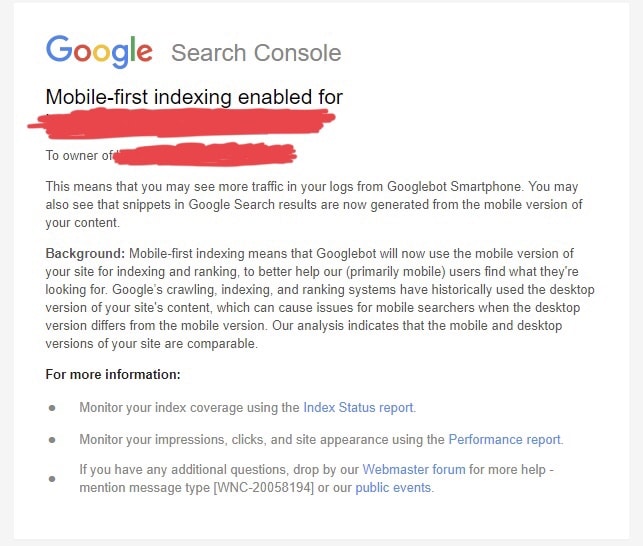






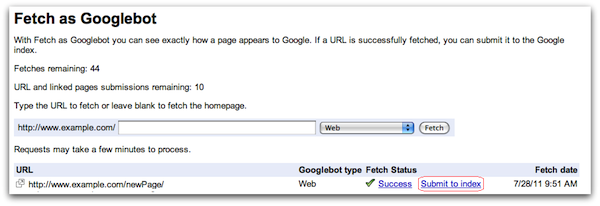
 If you have launched a new website, updated a single page on
your existing domain, or altered many pages and/or the structure of your
site, you will likely want Google to display your latest content in its
SERPs.
If you have launched a new website, updated a single page on
your existing domain, or altered many pages and/or the structure of your
site, you will likely want Google to display your latest content in its
SERPs.